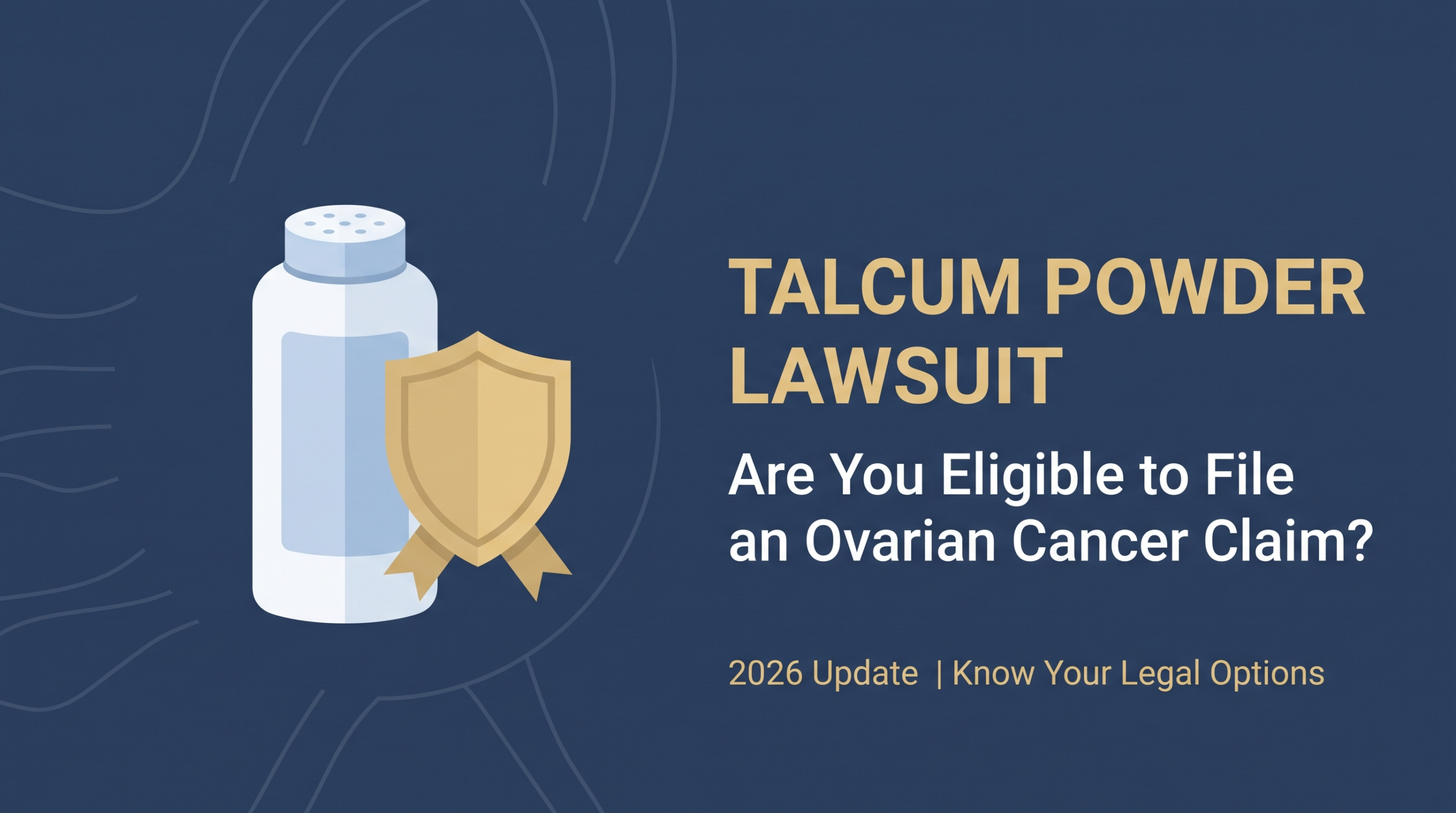
Talcum Powder Lawsuit 2026: Are You Eligible to File an Ovarian Cancer Claim?
Navigating a serious medical diagnosis is one of the most overwhelming experiences a person can face. When that diagnosis is coupled with the realization that an everyday consumer product might have played a role, the emotional burden can feel incredibly heavy. For decades, families have trusted cosmetic talc products, welcoming them into their daily routines. Today, however, these same products are the focus of intense legal scrutiny. If you or a loved one are researching this topic, you are likely looking for clarity amidst a sea of complex legal jargon and unsettling medical news.
This guide is designed to provide you with a calm, clear, and factual overview of the current landscape surrounding cosmetic talc litigation as we move through 2026. Whether you are exploring your own options or gathering information on behalf of a family member, understanding the foundational allegations, the eligibility criteria for filing a claim, and the mechanical workings of mass tort litigation can help you make informed decisions about your next steps. Our goal is not to alarm you, but to act as a well-informed guide, untangling the legal processes so you know what to expect.
A Note on Our Content: This educational resource has been curated by mass-tort legal content specialists dedicated to translating complex multidistrict litigation (MDL) trends into accessible information. We monitor the shifting landscape of federal dockets—such as the tens of thousands of claims currently pending in MDL No. 2738—to provide you with accurate, up-to-date insights reflecting the realities of the legal system in 2026.
The General Allegations at the Center of These Lawsuits
To understand why a widely used cosmetic staple is now the subject of tens of thousands of legal claims, it is helpful to look at the geological relationship between talc and asbestos, as well as the specific legal arguments being made by plaintiffs across the country.
The Geological Proximity of Talc and Asbestos
Talc is a naturally occurring earth mineral, prized for its extraordinary softness and its ability to absorb moisture. For generations, it has been a primary ingredient in cosmetics, body powders, and hygiene products. However, talc deposits in the earth are often found naturally alongside asbestos, another naturally occurring mineral known for its heat resistance and fibrous structure. While talc itself is widely considered safe in its pure form, asbestos is a known carcinogen.
The core concern driving the current litigation is the risk of cross-contamination. Because the two minerals form in such close proximity, mining operations must be incredibly precise to extract talc without disturbing and incorporating microscopic asbestos fibers. Plaintiffs in these lawsuits contend that over the course of decades, major manufacturers of cosmetic talc failed to adequately purify their raw materials, resulting in end-consumer products that contained trace amounts of asbestos.
The Legal Argument: Failure to Warn
In product liability law, manufacturers have a legal duty to warn consumers about known or reasonably foreseeable risks associated with their products. The families filing these claims are not just alleging that the products were contaminated; they are arguing that cosmetic talc producers knew, or should have known, about the potential for asbestos contamination and the resulting health risks.
Plaintiffs point to internal company memos and historical testing data, arguing that manufacturers actively chose to withhold this information from the public to protect their market share. The lawsuits allege that if consumers had been properly warned about the potential risks of regular, long-term application of talc to the perineal (genital) area, they would have chosen safer alternatives, such as cornstarch-based powders.
The Medical Context: Exploring Potential Links
It is important to note that causation in these cases is fiercely debated. Plaintiffs rely on various epidemiological studies exploring potential links between the long-term use of talc-based body powders and elevated rates of specific cancers, particularly ovarian cancer. The theory suggests that microscopic talc particles, potentially carrying trace asbestos, can travel through the reproductive system and embed in ovarian tissue, leading to chronic inflammation and cellular changes over many years.
Conversely, the defense argues that decades of scientific testing and regulatory reviews demonstrate that their cosmetic talc products are safe and do not cause cancer. They contend that the scientific consensus on causation is not settled. Ultimately, in a courtroom, juries are tasked with weighing the conflicting expert testimonies and deciding whether the plaintiffs have met their burden of proof.
Who is Generally Considered Eligible to Explore a Claim?
Determining whether you or a loved one are eligible to explore legal action is not a simple yes-or-no question. Eligibility relies on a combination of specific factors that tie the use of the product to the subsequent illness. While only a licensed attorney can provide a definitive assessment of your individual situation, claims generally share several common criteria.
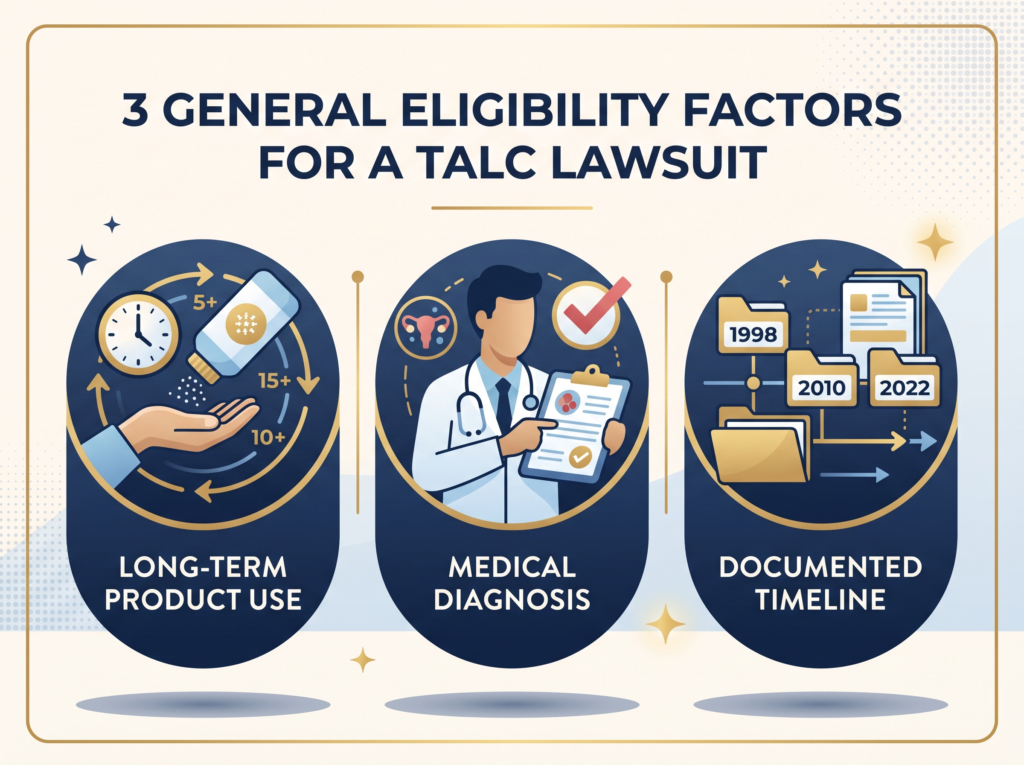
Long-Term, Consistent Product Use
Isolated or occasional use of cosmetic talc is generally not the focus of these lawsuits. The plaintiffs currently engaged in litigation typically report long-term, routine use of talc-based hygiene products. Often, this involves daily or weekly application for a period spanning several years—frequently four or more years of consistent use. The argument is based on cumulative exposure over a significant portion of a person’s life.
A Relevant Medical Diagnosis
To have standing in a personal injury or product liability case, an individual must have suffered a specific, quantifiable harm. In the context of cosmetic talc, the most common qualifying diagnoses are:
- Ovarian Cancer: This is the primary focus of the majority of pending claims. Plaintiffs allege that the perineal application of the powder directly contributed to the development of this disease.
- Fallopian Tube Cancer: Due to the pathway the powder is alleged to travel, some claims involve primary cancers of the fallopian tubes.
- Mesothelioma: While less common than ovarian cases in this specific litigation, some claims center on mesothelioma (cancer of the organ lining, typically the lungs or abdomen), alleging that aerosolized talc powder was inhaled over many years, carrying asbestos fibers into the respiratory system.
If the diagnosis is a different type of cancer, or if there is a strong genetic predisposition (such as a known BRCA gene mutation), an attorney will need to evaluate the medical records closely, as the defense frequently points to genetic factors as alternative causes for the illness.
Statutes of Limitations
Time is a critical factor in any legal proceeding. A “statute of limitations” is a strict legal deadline by which a lawsuit must be filed. These deadlines vary wildly from state to state; in some jurisdictions, you may have just one year from the date of diagnosis (or the date you reasonably should have known the product was linked to the illness) to file a claim, while other states allow up to six years. If a loved one has passed away, a different timeline, known as the statute of repose or a wrongful death statute of limitations, will apply. Because these deadlines are rigid, waiting too long to consult legal counsel can permanently bar you from seeking compensation.
How Mass Tort Litigation Works vs. Class Actions
When thousands of people are harmed by the same product, the legal system uses specialized mechanisms to handle the massive influx of lawsuits efficiently. You may hear the terms “class action” and “mass tort” used interchangeably in the media, but they are fundamentally different legal processes. Understanding this difference is crucial for setting your expectations.
The Nature of a Class Action
In a class action, one or a few individuals (the “class representatives”) file a single lawsuit on behalf of a large group of people (the “class”) who have suffered very similar, usually financial, injuries. If the case is successful or settles, the total compensation is divided among all class members, often resulting in each person receiving the exact same amount—sometimes just a small payout or a voucher. Class actions are ideal for situations where a company overcharged millions of consumers by a few dollars, but they are poorly suited for serious personal injury cases where one person’s suffering differs vastly from another’s.
The Mechanics of a Multidistrict Litigation (MDL)
Because every cancer diagnosis is unique—with different medical bills, different levels of pain and suffering, and different impacts on a family’s livelihood—these claims are typically handled as a mass tort, specifically through a process called Multidistrict Litigation (MDL).
In an MDL, thousands of individual lawsuits filed across the country are transferred to one federal judge for the pre-trial proceedings (discovery, expert depositions, and evidence gathering). This prevents duplicate efforts and ensures consistent rulings on evidence. However, unlike a class action, your case remains your own. You are an individual plaintiff. If a global settlement program is eventually established, your potential compensation would be evaluated based on the specific facts of your unique case, rather than simply dividing a pot of money equally among all plaintiffs.
If an MDL does not result in a settlement, individual cases are eventually remanded (sent back) to their original courts for their own individual trials. This structure provides the efficiency of a group lawsuit during the preparation phase, while protecting your right to an individualized outcome.
Documentation Typically Needed
Building a strong product liability case requires substantial evidence. While an attorney will do the heavy lifting in obtaining official records, gathering initial documentation is a collaborative process between you and your legal team. Having certain information readily available can streamline the evaluation of your claim.
1. Proof of Product Use
Proving that you or your loved one used a specific talc product decades ago can be challenging, but it is not impossible. Attorneys do not expect you to have retained grocery receipts from the 1980s. Instead, proof of use is often established through:
- Detailed Affidavits: A sworn, written statement detailing your personal hygiene routine, the specific brands you recall purchasing, where you bought them, and how often you applied them.
- Witness Testimony: Statements from family members, spouses, or close friends who can corroborate your long-term use of the product (e.g., someone who remembers seeing the distinct bottle on your bathroom vanity for years).
- Purchasing Records: In rare cases where individuals have used store loyalty cards consistently over the past decade, some purchase history might be recoverable.
2. Comprehensive Medical Records
The cornerstone of an ovarian cancer talc claim is the medical documentation linking your diagnosis to the legal parameters of the litigation. Your attorney will request you to sign HIPAA release forms, allowing them to legally order your records directly from your healthcare providers. Key documents include:
- Pathology Reports: These are the definitive lab reports confirming the exact type and stage of the cancer.
- Surgical Notes: If you underwent surgery, operative reports provide crucial details about the location and extent of the tumors.
- Oncology Records: Documentation of your treatment plan, chemotherapy, radiation, and overall prognosis.
3. A Clear Diagnosis Timeline
Be prepared to discuss your complete medical history. The defense will meticulously search for alternative causes for the cancer. You will need to provide a timeline of when symptoms first appeared, the exact date of your official diagnosis, and any family history of reproductive cancers. Being transparent with your attorney about your full medical history allows them to anticipate and counter the defense’s arguments effectively.
General Claims Process and Timeline Expectations
One of the most common, and most understandable, questions families ask is, “How long will this take?” The frustrating but honest answer is that there is no set timeline. Mass tort litigation is notoriously complex and slow-moving, often taking several years to resolve.
Step-by-Step Overview
- Initial Case Evaluation: You contact a law firm for a free consultation. They review your basic facts (diagnosis, usage history, dates) to see if you meet the preliminary eligibility criteria.
- Gathering Evidence: If accepted, your legal team begins ordering extensive medical records and drafting affidavits. This phase alone can take several months due to delays in hospital record departments.
- Filing the Complaint: Your attorney officially files your lawsuit, likely integrating it into the existing federal MDL (currently MDL 2738).
- Discovery Phase: Both sides exchange evidence. In mass torts, global discovery regarding the corporation’s internal documents is handled by lead attorneys, while fact sheets specific to your medical history are submitted for your individual case.
- Bellwether Trials: The court selects a few representative cases to go to trial first. These “bellwethers” serve as test cases to see how juries react to the evidence. The outcomes of bellwether trials heavily influence future settlement negotiations.
- Resolution: Cases are resolved either through a negotiated settlement program, an individual trial, or, in some instances, dismissal by the court.
Contextualizing the 2026 Landscape
As we navigate 2026, the landscape of the talcum powder lawsuit docket remains dynamic. Over the past few years, the primary manufacturer attempted multiple times to resolve these liabilities by creating a subsidiary and placing it into bankruptcy. These maneuvers caused significant pauses in the litigation. However, following the court’s rejection of the most recent bankruptcy attempt in 2025, the freeze on lawsuits was lifted.
Currently, the federal docket contains tens of thousands of active claims, making it one of the largest mass torts in U.S. history. With bankruptcy pauses currently out of the way, bellwether trials and formal, court-ordered mediation efforts are actively proceeding. While this represents forward momentum, the sheer volume of plaintiffs means that patience remains a necessity for anyone entering the litigation process today.
What Compensation Categories May Be Considered
When filing a civil lawsuit, the goal is to be made “whole” in the eyes of the law, which the legal system attempts to do through financial compensation, known as damages. It is vital to understand that no ethical attorney can promise a specific dollar amount, and past verdicts are not a guarantee of future results. Settlement values, if they occur, vary dramatically based on the severity of the illness, the age of the plaintiff, and the strength of the evidence.
If a case is successful, compensation is generally divided into two main categories: economic and non-economic damages.
Economic Damages (Verifiable Financial Losses)
These are out-of-pocket costs and verifiable financial burdens directly caused by the diagnosis. They include:
- Medical Expenses: Both past and future costs related to treating the illness. This encompasses hospital stays, surgeries, chemotherapy, prescription medications, and copays.
- Lost Wages: Compensation for the income you lost while taking time off work for treatment and recovery.
- Loss of Earning Capacity: If the illness permanently prevents you from returning to work or forces you to take a lower-paying job, you may be compensated for the future income you will no longer be able to earn.
Non-Economic Damages (Subjective Losses)
These damages compensate for the physical and emotional toll of the disease, which are harder to quantify but often represent the most significant impact on a family’s life.
- Pain and Suffering: Compensation for the physical pain endured due to the cancer and the rigorous medical treatments.
- Emotional Distress: Acknowledgment of the anxiety, depression, fear, and emotional trauma caused by a life-threatening diagnosis.
- Loss of Consortium: In some states, a spouse can claim damages for the loss of companionship, affection, and support resulting from the illness.
Wrongful Death Claims
If a loved one has tragically passed away from their illness, the eligible surviving family members (typically a spouse, children, or the executor of the estate) may file a wrongful death claim. Compensation in these cases may cover funeral and burial expenses, the deceased’s final medical bills, and the emotional and financial loss experienced by the surviving family.
Frequently Asked Questions
To provide further clarity, here are answers to some of the most common questions individuals have when researching a potential claim.
1. Does it cost money upfront to hire a lawyer for this?
No. Reputable mass tort law firms operate on a contingency fee basis. This means you pay nothing out of pocket to retain their services or to cover the costs of building the case (such as ordering records or hiring medical experts). The law firm only gets paid if they successfully secure a settlement or jury verdict on your behalf. Their fee is a pre-agreed percentage of the final recovery. If the case is not successful, you owe the firm nothing.
2. Can I still file a claim if my family member passed away several years ago?
It is possible, but it depends entirely on the statute of limitations in your specific state. Wrongful death statutes have strict deadlines, sometimes as short as one or two years from the date of death. However, some states apply a “discovery rule,” which might extend the deadline if the connection between the product and the illness was only recently discovered. You must consult an attorney immediately to determine if the window to file is still open.
3. What if I used multiple different brands of powder?
Using multiple brands does not disqualify you from exploring a claim. Your attorney will ask you to identify every brand you remember using. If multiple manufacturers are implicated, your legal team will determine the best strategy for filing your claim, which may involve naming multiple defendants in your lawsuit.
4. Will I have to testify in court?
In a mass tort, the vast majority of plaintiffs never set foot in a courtroom. Only a tiny fraction of cases are selected as bellwether trials. Most plaintiffs are only required to fill out detailed Plaintiff Fact Sheets and, occasionally, participate in a deposition (a sworn question-and-answer session held in a conference room, not a courtroom). If a global settlement is eventually reached, the process generally involves submitting paperwork rather than appearing before a judge.
5. Why are there so many commercials about a baby powder lawsuit?
The influx of television and digital advertising is a direct result of the massive scale of this litigation. Because the product was used by millions of people over decades, law firms use broad advertising campaigns to reach potential plaintiffs who may have developed related illnesses but remain unaware of the alleged link to the product. These ads serve as a method of identifying individuals who might be eligible to join the ongoing federal multidistrict litigation before their state’s statute of limitations expires.
6. Is a settlement guaranteed now that the bankruptcy was dismissed?
No. The dismissal of the manufacturer’s bankruptcy attempts simply means that the legal protections halting the lawsuits have been removed. It allows the litigation to proceed in the civil justice system, and it opens the door for trials and court-ordered mediation. However, the defendant continues to vigorously deny the allegations and maintain the safety of their products. A settlement is never guaranteed until a formal agreement is signed and approved by the courts.
Important Disclaimer: The content provided in this article is intended for general educational and informational purposes only. It does not constitute legal or medical advice. The status of mass tort litigation is highly fluid, and laws regarding statutes of limitations vary significantly by jurisdiction. If you believe you have been affected, you should consult directly with a licensed personal injury attorney who can evaluate the specific facts of your case. Furthermore, decisions regarding medical screening, treatment, or the discontinuation of any product should only be made in consultation with a qualified healthcare physician.